
How to bring a Kickstarter or Indiegogo product to Japan
A successful Kickstarter or Indiegogo campaign proves your product can sell. It does not prove that Japanese buyers will find it, understand it, or be allowed to buy it. The usual next step is a Japanese crowdfunding campaign run with a Japanese partner, rebuilt for Japan rather than copied.
In short: your Kickstarter result opens doors in Japan, but you still have to launch again
Treat Japan as a new launch. Confirm Japanese certifications, sign with a Japanese partner, rebuild the page in Japanese, and run a Japanese crowdfunding campaign on Makuake or GREEN FUNDING to a list you built in advance.
By Yuki Nojiri, CEO of Eifer, Inc. (Tokyo). Since 2019 Eifer has launched or supported 58+ overseas brands in Japan.
Why doesn't Kickstarter success carry over to Japan automatically?
Founders who raised well on Kickstarter often expect Japan to follow on its own. Some Japanese backers may even have pledged. But a Japanese launch is a separate market with its own platforms, language and rules. These are the five gaps we see most.
1. Japanese buyers discover products on Japanese platforms
Japanese early adopters mostly find new products in Japanese, with yen prices that include consumption tax and delivery inside Japan. Your Kickstarter page, however strong, is largely invisible to them.
2. Your proof is in English
Thousands of backer comments from the US and Europe carry surprisingly little weight with a Japanese buyer. A few Japanese voices on the page usually do more.
3. The product may not be sellable in Japan yet
Electrical products may need PSE marking, products with Bluetooth or Wi-Fi need Japanese radio certification, and items that touch food face a food-safety inspection. On one of our coffee products, that inspection took about four months and cost about ¥200,000. Confirm what applies to your product with a registered body before you set a launch date.
4. Your message may be aimed at the wrong person
A Korean coffee appliance we launched first targeted people in their 20s. When Ichikawa, our business partner, interviewed the people who had actually bought it, they were older. Your Kickstarter audience tells you who bought at home, not who will buy in Japan.
5. Japanese platforms want something new to Japan
If parallel imports of your product already appear on Japanese marketplaces, the "now in Japan" story gets weaker. Talk to a Japanese partner before resellers define your price for you.
What your Kickstarter campaign does give you in Japan
Proof the product sells
Backer numbers and delivery history make a Japanese partner's first conversation much easier.
Price and set data
Which tier and which bundle backers chose is a strong first guess for your Japanese reward structure.
Assets to rebuild from
Product video, photos and renders can be re-edited for Japan, which is cheaper than shooting from scratch.
Manufacturing readiness
A product that has already shipped at volume is a much smaller risk for a partner placing a first order.
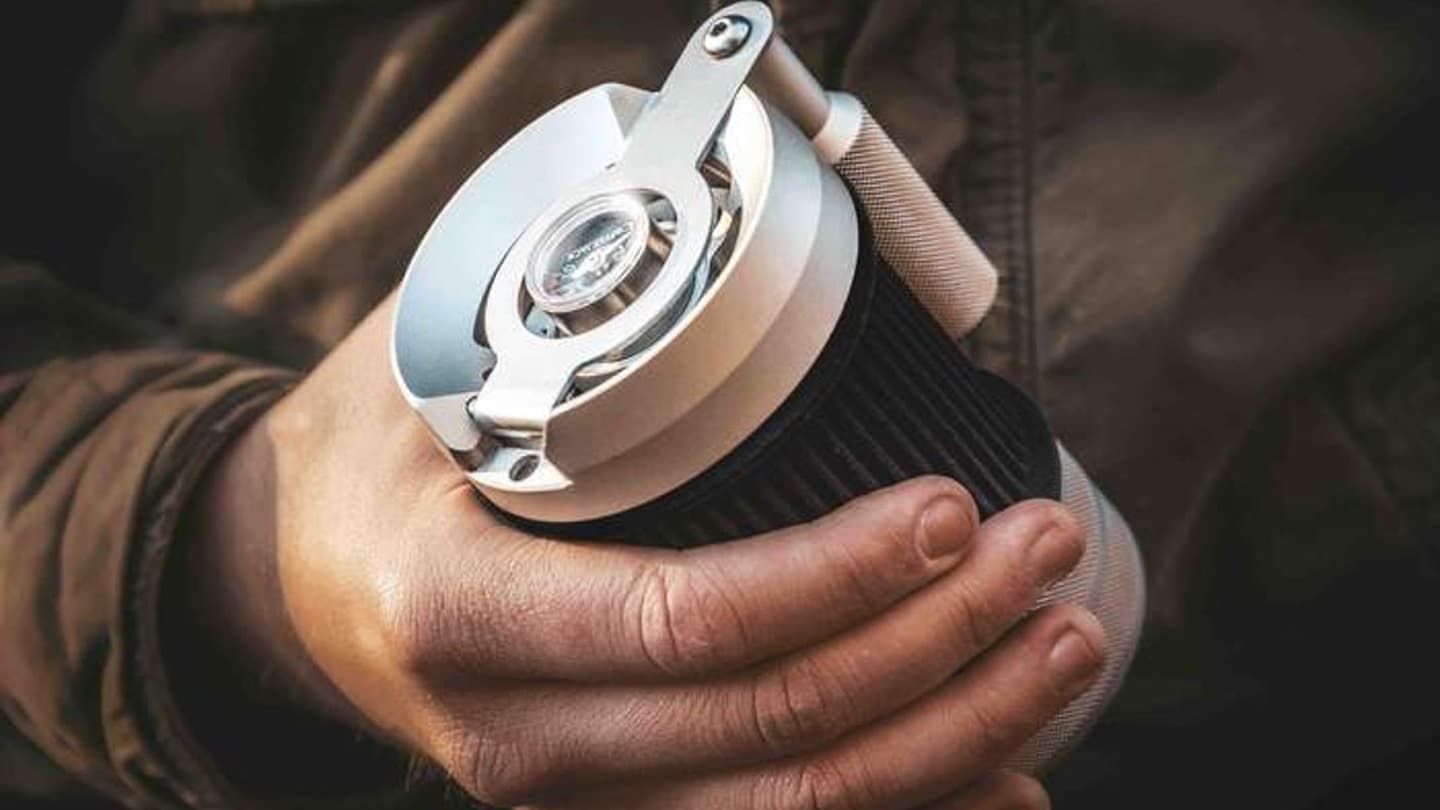
COFFEEJACK: from Kickstarter to GREEN FUNDING
Raised on Kickstarter from 3,793 backers (about USD 211 each)
Raised on GREEN FUNDING in Japan from 244 backers (closed)
Average per Japanese backer
What COFFEEJACK's Japanese campaign shows
COFFEEJACK is a portable espresso maker from the UK. A Japanese client company we supported secured the exclusive Japan rights from zero and ran a Japanese campaign on GREEN FUNDING, which closed at ¥11,046,630 from 244 backers. Kickstarter had brought thousands of backers at around USD 211 each; Japan brought a few hundred at around ¥45,000 each, so don't plan Japan as a smaller copy of your Kickstarter. How the set and price ladder drove that result is covered in our article on pricing for Japan.
What to change when you turn a Kickstarter page into a Japanese page
A Kickstarter page is written for backers who know the platform's habits. A Japanese crowdfunding page is read by buyers deciding whether to pre-order a product they have never seen. Go through this checklist before anything is translated:
- Prices in yen with consumption tax included, not in dollars with tax and shipping added at checkout.
- Delivery to Japanese addresses with a clear month, not "estimated delivery" in a foreign country.
- Remove stretch goals, add-on surveys and pledge-manager language. Japanese reward pages list exactly what is in each set.
- Specifications in metric units and Japanese terms, with size shown next to familiar objects.
- Japanese certification and safety information where it applies, stated plainly.
- A Japanese contact for questions, warranty and returns.
- The product story told for a Japanese buyer: the problem it solves in Japanese daily life, not the founder's campaign journey.
- Claims you can prove under Japanese advertising rules. Superlatives that pass on a US campaign page may not pass a Japanese platform's review.
Reuse what travels well: product footage, close-up photos and the demonstration of what the product does. Rewrite everything that explains it.
When should you bring a Kickstarter product to Japan?
Our answer: once your Kickstarter backers have their product, or are about to. Three reasons.
- A delivery record is the strongest thing you can show a Japanese partner. A campaign that shipped on time says more than the amount it raised.
- Japanese backers expect a firm delivery date. On Makuake, for example, the project owner must refund backers if delivery runs beyond the stated period. Promising Japan a date before your first production run has shipped puts that risk on your partner.
- Production samples, not prototypes, are what certification bodies and Japanese testers need to see.
Don't wait too long either. The months after delivery are when your product videos, user photos and reviews are freshest, and before parallel importers start listing your product in Japan at a price you did not choose. Starting conversations with a Japanese partner while your backers are still waiting for delivery is often the right overlap: the paperwork and certification take months anyway.
From Kickstarter to a Japanese launch, step by step
Check it can be sold in Japan
Certifications such as PSE and radio certification, Japanese labelling, and 100 V mains for anything you plug in.
Choose a Japanese partner
Agree who imports, who is the seller to Japanese backers, and the terms of any exclusive distribution.
Check samples and imports
Test production samples in Japan and confirm import paperwork before anything is promised to backers.
Rebuild the page for Japan
One message, a short video, Japanese voices, and an early-bird ladder priced with consumption tax included.
Build a LINE list
Small paid ads to a Japanese landing page, with a ceiling on what each sign-up may cost.
Run the Japanese campaign
Makuake or GREEN FUNDING, opened with a push to the list on day one.
Scale with the data
Amazon, Rakuten and retail, using the campaign result as proof of Japanese demand.
What will a Japanese partner ask you for?
When a Japanese partner looks at a crowdfunded product, these are the things it will usually ask for. Having them ready shortens the process by weeks.
- Your campaign numbers and delivery record. Did you ship on time, and what did backers complain about?
- Certification status and test reports, or a plan to get them.
- Wholesale price and minimum order for a small first order.
- Room in the Japanese retail price for consumption tax (10% for most goods), the platform fee on the amount raised, ads and Japanese support.
- Source files: video footage, photos and renders we can re-edit.
- Warranty, spare parts and how returns will work in Japan.
- What you expect after the campaign: Amazon, Rakuten, retail, and over what term.
It works the other way too. When the maker of an overseas travel stroller was choosing its Japanese partner, it asked a company we support where they had found the product, about their experience with similar products, and about their wholesale and retail experience. It did not ask about English skill. After 13 days without a reply, the maker followed up to say it was narrowing down candidates. Serious makers vet their Japanese partners, and you should too.
Speed is possible when the product is ready. MUDORA, an Apple Watch band from a NASDAQ-listed Israeli company, had sold 3,000+ units overseas before Japan, and has 10 SKUs. Eifer was its first Japan partner, and it had sales from the first day of the contract by emailing an existing customer list.
Kickstarter to Japan FAQ
Can a Kickstarter product launch on Japanese crowdfunding?
Yes. Overseas crowdfunded products launch on Japanese platforms regularly, and GREEN FUNDING says it works with crowdfunding platforms around the world. Expect each platform to screen the product and ask about prior sales.
Do I need a Japanese company to sell my Kickstarter product in Japan?
Not necessarily your own, but usually a Japanese partner acts as the seller and project owner. Makuake's guidelines, for example, say it may refuse foreign corporations without a branch in Japan.
Is Japanese crowdfunding worth it after Kickstarter?
For many products, yes, because it gives real Japanese orders and a public result to show retailers. It is a new launch, though, and needs its own page, list and budget.
How long does it take to bring a Kickstarter product to Japan?
Plan around three months of preparation before a campaign, plus certification time, which can be longer. The fastest launch we have seen produced sales in the first week.
Related articles

Makuake for foreign brands: how overseas brands get on Makuake and launch well
Who can list a project, why most brands go through a Japanese partner, what the page needs and why day one decides
Read the article →
How to test Japanese demand before you commit to Japan
A small ad test, a sign-up list and a pre-order campaign tell you more than a market report
Read the article →Pricing for Japan: why the most expensive set sold best
What a ¥11M crowdfunding campaign shows about bundles, early-bird ladders and price levels in Japan
Read the article →Funded on Kickstarter and looking at Japan?
Send us your campaign page and wholesale terms. On a 30-minute call we will tell you what would need to change for Japan and which Japanese platform we would start with.
- Minimal upfront cost for your brand
- The form takes about 2 minutes
- We reply within 3 business days